
Mitigating EHP Infestation in Shrimp Aquaculture: Advanced Benthic Remediation and Pond Preparation as the Definitive Eradication Strategy
Enterocytozoon hepatopenaei (EHP) is severely eroding profits in shrimp aquaculture: post-larvae survive but suffer from severe growth retardation, while antibiotics remain entirely ineffective. Research in Thailand confirms that only a combination of mechanical desilting, hyper-alkaline thermal lime disinfection, and intense solar desiccation can effectively eradicate spores from the benthic substrate. Practical operations in Vietnam demonstrate that implementing this three-step protocol, in strict accordance with FAO standards, represents the definitive pathway to safeguarding aquacultural economic returns.
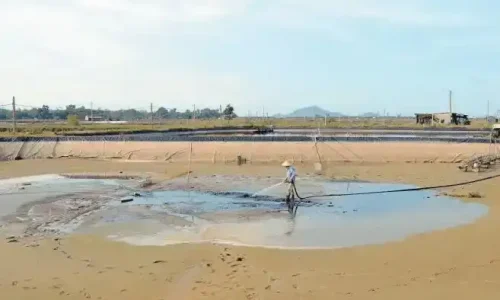
- Transmission Dynamics: Shrimps ingest environmental spores sequestered within the benthic sludge or consume contaminated feed. Upon ingestion, the spore extrudes its polar filament to penetrate the epithelial cells of the hepatopancreatic tubules, monopolizing host nutrients and directly inducing severe growth retardation.
- The Mechanism of Pharmaceutical Inefficacy: The primary biological reservoir of the pathogen is anchored deep within the accumulated pond benthic substrate rather than within the shrimp biomass. Consequently, the standard application of water-column disinfectants or oral medicated feeds cannot physically access or neutralize spores embedded in the sub-surface benthic matrix.
- Cross-Cycle Transmission: Residual EHP spores from preceding production cycles continuously deposit and accumulate within the bottom soil, transforming the substrate into a permanent vertical infectious reservoir for subsequent crops.
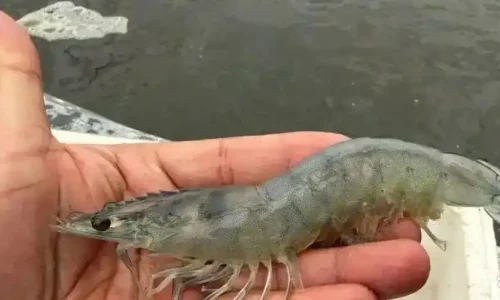
II. The Three-Step Benthic Eradication Protocol: From Mechanical Removal to Chemical Disinfection, Constructing an Absolute Biosecurity Barrier
EHP spores possess extreme biochemical resistance, rendering conventional high-pressure water-gun rinsing and standard agricultural lime applications completely ineffective. Cultivators must rigorously execute a standardized three-step protocol: Mechanical Desilting Thermal Liming $\rightarrow$ Solar Desiccation. This integrated regime creates a triple-action eradication system combining physical extraction, chemical denaturation, and natural ultraviolet radiation.
Step 1: Mechanical Desilting—Physical Removal of 10–20 cm of Anoxic Black Sludge (Mandatory FAO Standard)
High-pressure water hoses only clean the superficial layer of the pond bottom, leaving EHP spores hidden deep within the soil matrix and interstitial crevices untouched. Operations must strictly conform to the biosecurity specifications of the Food and Agriculture Organization (FAO) by executing thorough physical desilting based on pond morphology:
- Earthen Ponds:
Deploy excavators or bulldozers to mechanically dredge and completely remove the 10–20 cm thick layer of black organic sludge. This specific zone represents the primary accumulation reservoir for EHP spores, organic matter, and subterranean toxins. The excavated sludge must be transported completely outside the aquaculture facility for isolated treatment; discharging it into public water systems is strictly prohibited to prevent cross-contamination. - HDPE-Lined / Tarpaulin Ponds:
Focus intensity on overlooked critical biological dead zones, including pond corners, tarpaulin liner welding seams, and sub-surface aeration pipelines. Scrape away all adhered organic bio-fouling and trapped spore matrices to clear any physical obstructions prior to chemical disinfection.
Core Efficacy: This step physically eliminates over 90% of the ambient pathogen load and organic burden at the source, allowing subsequent thermal liming to achieve maximum chemical efficacy.
Step 2: Thermal Liming (Quicklime, CaO) Treatment—Hyper-Alkalinity and Exothermic Synergy for Dual-Action Spore Inactivation
Standard agricultural lime or hydrated lime lacks sufficient alkalinity to destroy EHP spores and merely acts as a pH regulator. Only quicklime (burnt lime, CaO) can induce complete spore inactivation through the simultaneous generation of hyper-alkaline conditions and intense exothermic hydrolysis.
Dr. Tran Huu Loc from the ShrimpVet Research Center in Vietnam has verified the following clinical baseline:
- The Critical Threshold for EHP Spore Inactivation: Environmental Quicklime application is the only practical method capable of establishing and maintaining this hyper-alkaline standard in open ponds.
Precision Operational Specifications:
- Dosage Optimization:
For ponds with a confirmed historical baseline of EHP infection, apply a strict dosage of 6 metric tons per hectare (600 kg per 1,000 m²). High volumetric dosing is required to ensure complete chemical penetration. - Critical Execution Technique (Dry-Bed Application Mandate):
Completely drain the pond. Maintain the benthic soil in a moist, humid state (20% to 30% soil moisture; loose texture with zero standing water blocks) before uniformly broadcasting the quicklime across the entire basin. - Exothermic Reaction:
The chemical reaction between CaO and residual soil moisture triggers rapid hydrolysis, driving localized soil temperatures up to 70–80°C while generating a hyper-alkaline matrix of $\text{pH} \approx 12$. This dual-action stress denatures the spore structure. - Biological “Suicide Lure” Mechanism:
The hyper-alkaline environment triggers a false physiological cue, forcing the EHP spores to prematurely extrude their polar filaments. Deprived of a live shrimp host to parasitize, the exposed microsporidians die rapidly. This represents the most efficient biological inactivation mechanism currently available. - Mandatory Soil Tilling:
Immediately following the quicklime application, deep-till or plow the soil to incorporate the chemical into the deep sub-surface layers. This prevents superficial-only disinfection and ensures spores sequestered deep within the soil profile are neutralized.
Step 3: Intense Solar Desiccation—Ultraviolet and Residual High-pH Synergy for Final Reservoir Elimination
Driven by tight commercial crop turnarounds, farmers frequently bypass the drying phase. However, solar UV radiation remains the most cost-effective and biologically powerful natural disinfectant available, as certified by the Central Institute of Brackishwater Aquaculture (CIBA) in India.
- Desiccation Standards:
Following the quicklime treatment, expose the pond bottom to direct, unobstructed sunlight for 20 to 30 days continuously, until the soil surface displays desiccation cracks measuring 1–2 cm in width and 5–10 cm in depth. - Multidimensional Biosecurity Values:
- Direct Irradiation: Solar ultraviolet rays directly destroy residual EHP spores, opportunistic pathogenic bacteria, and harmful macro-biological or parasitic egg reservoirs.
- Synergistic Eradication: The interaction between residual high-pH soil matrices and extreme dryness completely deactivates any remaining latent pathogens.
- Substrate Remediation: This phase restores soil porosity, accelerating the oxidation and degradation of hazardous gaseous compounds like hydrogen sulfide and ammonia nitrogen , which drastically mitigates environmental stress risks for the subsequent stocking cycle.
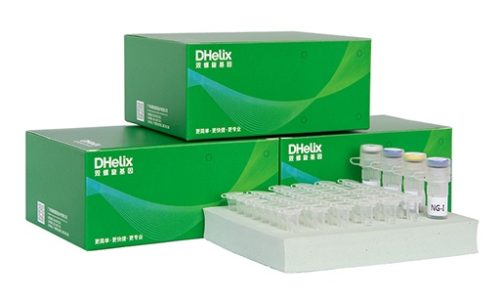
Related Shrimp qPCR Detection Kits
- Necrotizing Hepatopancreatitis Bacterium (NHPB) Detection Kit
- Enterocytozoon Hepatopenaei (EHP) Detection Kit
- White Spot Syndrome Virus (WSSV) Detection Kit
- Acute Hepatopancreatic Necrosis Disease (AHPND/EMS) Pathogen Detection Kit
- Infectious Myonecrosis Virus (IMNV) RNA Detection Kit
- Decapod Iridescent Virus 1 (DIV1) Detection Kit
- Vibrio parahaemolyticus(VP) Detection Kit
- Infectious Hypodermal and Hematopoietic Necrosis Virus (IHHNV) Detection Kit
- Enterocytozoon Hepatopenaei (EHP-SWP) Detection Kit
- Penaeus Vannamei Nodavirus (PvNV)RNA Detection Kitt
- Paranophrys carcini Detection Kit
- Thiothrix Detection Kit
- Lecethrisx mucor Detection Kit
- Macrobrachium Rosenbergii Nodavirus (MrNV) RNA Detection Kit
- Hepatopancreatic Parvovirus (HPV) Detection Kit
- Shrimp Hemocyte Iridescent Virus (SHIV) Detection Kit
- Baculovirus Penaei (BP) Detection Kit
- Covert Mortality Nodavirus (CMNV) RNA Detection Kit
- Yellow Head Virus (YHV) RNA Detection Kit
- aura Syndrome Virus (TSV) RNA Detection Kit