Incubation and Etiological Framework of White Muscle Syndrome (WMS): Pathological Presentation and Temporal Vulnerability

Incubation and Etiological Framework of White Muscle Syndrome (WMS): Pathological Presentation and Temporal Vulnerability

White Muscle Syndrome (WMS) represents a cryptic killer in shrimp aquaculture, displaying critical physiological warning signs prior to localized muscle necrosis. When milky-white opaque abdominal segments and swimming abnormalities manifest between Day 30 and 50 Post-Stocking, bacterial surges and mineral imbalances within the benthic zone have already compromised the crop. Achieving biosecurity relies on three critical vectors: routine molecular screening for pathogens, engineering optimized pond bottom topography, and precision calcium supplementation to avert catastrophic mortality during the peak Day 50 to 70 epidemic window.

White Muscle Syndrome (WMS) is a highly prevalent pathological disorder in shrimp aquaculture, phenotypically characterized by extensive, opaque whitening of the striated muscular tissues and localized muscular spasms. In recent production cycles, WMS has emerged as a primary bottleneck for farm managers, exerting a particularly devastating economic impact during the mid-to-late grow-out phases.

Optimizing benthic topography and removing organic sludge to prevent White Muscle Syndrome in shrimp ponds.
I. Core Pathological Characteristics of White Muscle Syndrome (WMS)
WMS presents highly distinct and easily identifiable clinical biomarkers on-site:
    • Muscular Opacification: The striated muscle tissues exhibit a distinct, milky-white opaque presentation, manifesting most prominently within the abdominal segments of the shrimp.
    • Structural Degradation: The muscular architecture becomes loose and spongy, frequently accompanied by chronic soft-shell syndromes and structural fragility.
    • Rigidity and Locomotor Dysfunction: Affected individuals display physical rigidity, a sharp decline in locomotor capacity, and erratic, abnormal swimming postures.
    • Commercial Downgrading: The structural quality of harvestable commodities is drastically degraded, directly depressing market evaluation and farm gate prices.
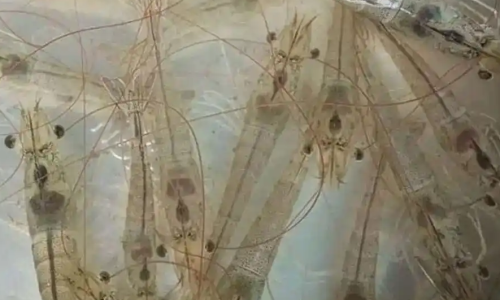

As the pathology advances to terminal phases, the localized muscular tissues undergo severe necrosis (apoptosis), completely disrupting normal muscle contraction mechanisms. Absent immediate, targeted biosecurity interventions, this necrosis rapidly culminates in mass epizootics and catastrophic financial losses.
From an etiological standpoint, historical literature frequently correlated WMS exclusively with Infectious Myonecrosis Virus (IMNV). However, frontline empirical diagnostics reveal that a significant proportion of modern clinical WMS cases test negative for IMNV via molecular screening. This demonstrates that WMS is a multifactorial syndrome driven by compounding biotic and abiotic etiologies rather than an isolated viral vector.
Empirical data reveals a strict correlation between WMS outbreaks and the Days of Culture (DoC): subclinical warning signs typically initiate between DoC 30 and 50, while the peak epidemic window with acute mortality is concentrated between DoC 50 and 70. Driven by this pressure, many farmers are forced to execute emergency premature harvests—frequently abandoning production around DoC 58—failing to amortize initial operational capital. Even in ponds where early mortality appears temporarily contained, continuing the crop typically leads to an exponential mortality surge near the terminal phase, causing a drastic collapse in the final Survival Rate (SR).
DHelix Q8 qPCR system and detection kits monitoring shrimp hepatopancreas enlargement and pathogen infections in Litopenaeus vannamei
II. Etiological Spectrum of White Muscle Syndrome (WMS)
(A) Putative Bacterial Infection Linked to Photobacterium damselae subsp. damselae (PDD)
Field diagnostic investigations demonstrate that WMS outbreaks cannot be single-mindedly attributed to IMNV viral lineages. Recent epidemiological tracing has revealed a strong potential correlation with Photobacterium damselae subsp. damselae (PDD), a highly virulent bacterium capable of producing highly destructive histolytic and necrotizing cytotoxins.
Within industrial aquaculture matrices, PDD is conventionally classified as an opportunistic secondary pathogen. It rarely initiates primary infection unless the shrimp host is simultaneously exposed to extreme environmental stress or endogenous physiological disequilibrium. Pathogenically, virulent strains of PDD secrete lethal exotoxins, most notably damselysin (DLY). This highly cytotoxic protein directly attacks and lyses host cellular membranes, damaging striated muscle tissue and inducing the classical clinical presentations of WMS.
(B) Improper Benthic Management and Substrate Engineering Deficiencies
During the grow-out cycle, the extensive accumulation of unmitigated organic waste, raw benthic sludge, and the subsequent expansion of localized anaerobic dead zones severely disrupt the equilibrium of the ambient water-column microecology. This deterioration creates a highly favorable ecological niche for the rapid proliferation of opportunistic pathogenic bacteria, including PDD.
Furthermore, physical design parameters, such as the bottom topography slope and the distributional kinetics of sand and silt across the pond basin, directly dictate total substrate stability and waste discharge efficiency. Inadequately engineered or poorly maintained pond bottoms continuously impose high levels of chronic environmental stress on the shrimp biomass. This stress raises host susceptibility to muscular tissue degradation and increases the risk of a widespread WMS outbreak.
(C) Co-Infection Dynamics and Microbial Ecology Correlations
WMS is also putatively linked to co-infections with other prevalent, high-mortality pathologies common in intensive aquaculture systems, such as Acute Hepatopancreatic Necrosis Disease (AHPND/EMS). It is also tied to elevated, unmanaged total Vibrio densities within the production water column. Currently, specialized researchers are leveraging advanced high-throughput microbiome sequencing to further characterize the exact interactive mechanisms and pathogenic pathways between WMS, comorbid diseases, and deleterious microbial communities.
Application of agricultural lime to achieve hyper-alkaline soil conditions for EHP eradication in shrimp ponds.
III. Preventive Strategies and Comprehensive Shrimp Health Management for WMS
(A) Fortifying Early-Warning Systems and Diagnostics
To identify subclinical indicators of WMS before catastrophic mortalities occur, farm managers must implement a routine molecular screening protocol. Regularly collect samples of shrimp biomass, ambient production water, and benthic sediment to confirm the presence or absence of target pathogens via laboratory diagnostics. On-site, any initial manifestation of pallor or milky-white opacification within the abdominal musculature must be treated as a critical early warning sign. Immediate, targeted biosecurity interventions should be initiated to halt epidemiological transmission across the population.
(B) Optimizing Benthic Topography and Substrate Remediation
Regularly evaluate and mechanically adjust the slope profile of the pond bottom to ensure that metabolic waste and organic flocs are efficiently centralized and discharged from the system. Implement strict management protocols for organic matter and sludge accumulation. Promptly remove un-decomposed organic waste to limit the expansion of anaerobic zones, thereby stabilizing the ambient microbial ecology and reducing the primary breeding grounds for opportunistic pathogenic bacteria.
(C) Precision Mineral Hydration and Ionic Equilibrium
Execute regular water chemistry profiling to monitor essential macromineral concentrations, focusing heavily on maintaining the ionic equilibrium of vital elements such as calcium . Calcium ions directly regulate myocardial and striated muscular contraction mechanisms in crustaceans, playing a crucial protective role against WMS. Because source water chemistry varies significantly across geographic regions, mineral supplementation strategies must be tailored to local water profiles to prevent mineral-deficiency-induced muscle spasms and subsequent tissue degradation.
(D) Immunological Fortification and Secondary Infection Mitigation
Systematically evaluate and incorporate bio-active functional feed additives to optimize nutritional delivery and maximize systemic immune response. Elevating the baseline non-specific immunity of the shrimp biomass effectively mitigates the risk of secondary infections by opportunistic pathogens such as PDD. This approach limits the progression of subclinical tissue stress into acute, terminal WMS pathology.
 
DhelixGene YHV qPCR detection kit for shrimp disease diagnosis

n summary, White Muscle Syndrome (WMS) is a complex, multifactorial pathology driven by the compounding interactions of pathogenic agents (such as IMNV viral strains and PDD bacteria), chronic environmental stress, benthic substrate deterioration, and water-column mineral disequilibrium. The clinical severity of this syndrome peaks noticeably between DoC 50 and 70, threatening final Survival Rates (SR) and undermining aquacultural profitability. It is clinically critical to recognize that once muscular opacification becomes visibly distinct to the naked eye, the underlying striated muscle tissue has often already undergone irreversible apoptosis and cellular necrosis. At this terminal stage, therapeutic interventions yield minimal curative success, and operational priority must pivot immediately toward strict quarantine to prevent epidemiological transmission to adjacent ponds. Consequently, proactive prevention—achieved through rigorous molecular screening and early warning, immunological fortification, and precision environmental management—remains the most definitive and effective strategy for mitigating WMS. Concurrently, implementing routine pathogen screening with the DHelix Q16R Portable qPCR System—utilized in conjunction with diagnostic assays such as our highly specific Infectious Myonecrosis Virus (IMNV) RNA Detection Kit—allows farm managers to continuously monitor stock health and environmental biosecurity, facilitating early-stage intervention before clinical proliferation occurs.

Related Shrimp qPCR Detection Kits